Foundation Lifting & Levelling in Calgary
Lifting and re-levelling settled structures back toward original elevation, then holding them there on engineered piles.
Our Foundation Lifting & Levelling Process
Every job follows a clear, proven process so you know exactly what to expect from start to finish.
Quote
Send dimensions or drawings. Most quotes come back inside 48 hours.
Site visit
We confirm access, soil expectations and layout before scheduling.
Engineering
Stamped drawings and load calculations where the permit requires them.
Install
Piles driven to engineered torque. Most residential jobs take half a day.
Torque log
You receive the torque record, verified capacity and as-built documentation.
What foundation lifting & levelling actually involves
A structure that has settled is not simply sitting lower. It is distorted, and everything attached to it has spent years adapting to the distorted shape. Doors were planed to fit openings that are no longer square. Brick veneer, tile, plaster and the rigid runs of gas and drain pipe have all found positions they are comfortable in.
That is what makes lifting different from every other repair here. Raising a foundation back toward its original elevation does not undo the settlement — it moves the whole assembly back along a path it has since hardened against. Brittle finishes that survived going down do not necessarily survive coming up. Drywall joints open and tile cracks. Doors that currently close begin to bind, because their openings are being pulled back toward square while the door itself was cut to the crooked version.
So the real question is never how much lift is achievable — hydraulics will move more than the building will tolerate. It is how much lift is safe for this structure, and that is a structural judgement about what the superstructure can take, not a customer preference. Sometimes full recovery is realistic. Often the sensible target is partial: enough to fix the functional problems, stopping short of the damage. Sometimes the correct answer is to hold the building exactly where it stands and lift it nowhere at all.
How the job runs
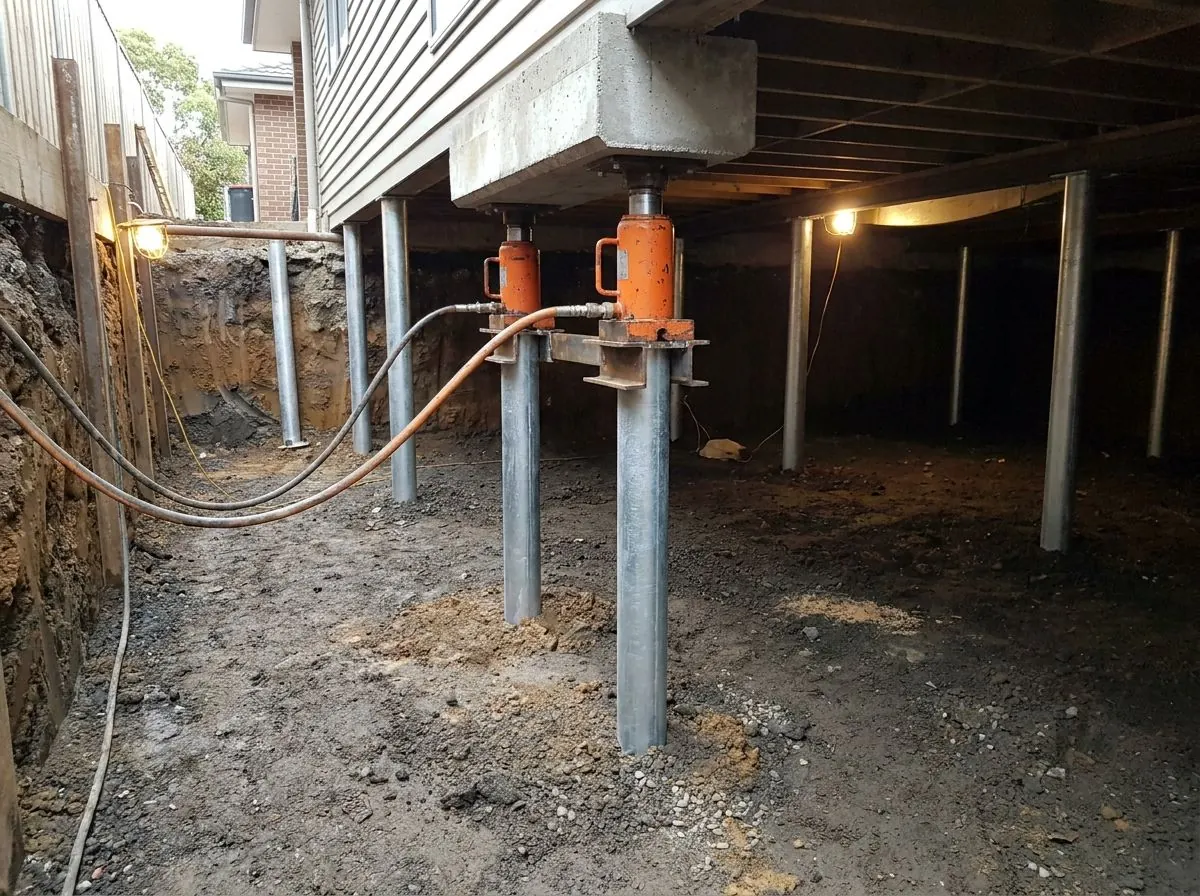
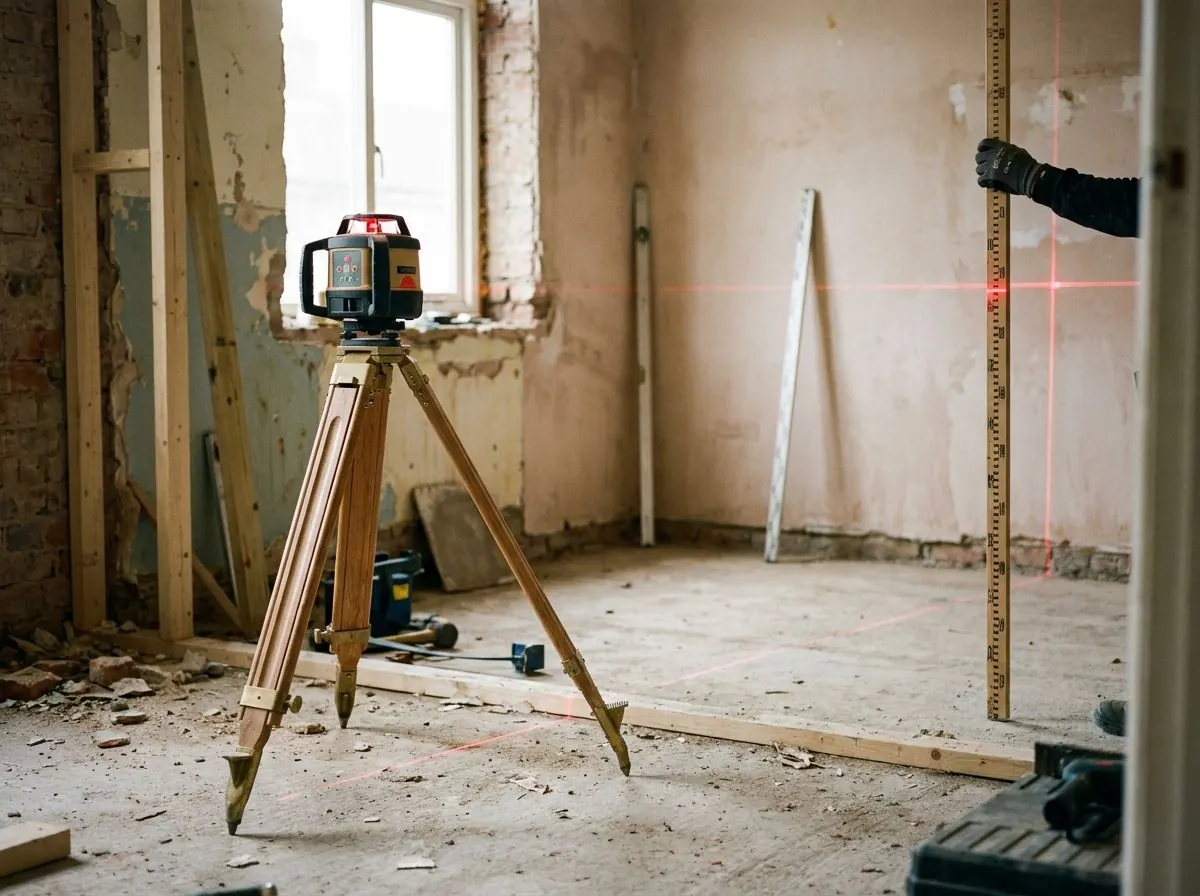
The pile and bracket work is the same underpinning installation described on that page. What differs is everything after. Jacks are set at every bracket and operated together rather than one at a time, because lifting at a point is how you crack a wall that was going to survive the lift. Movement is taken in small increments, with elevations read at fixed reference points between passes so the building's shape is tracked, not just its height. Somebody is inside watching drywall joints and door reveals, because the structure reports its own tolerance faster than a level does.
Stopping criteria are agreed before a jack goes under anything: the target elevation, and — more usefully — the signs that will stop the lift whether or not that target is reached. Rigid services crossing the lift line, gas especially, are planned for beforehand. When the agreed elevation is reached, load transfers onto the brackets and the jacks come out; the building is held mechanically on the pile group, not on hydraulics left in place.
What decides the spec
Where the pile line goes is set by the shape of the settlement rather than the length of the wall. You pile the part that dropped plus enough sound wall beyond that the lift does not create a new hinge. Bracket spacing follows wall load, with one addition specific to lifting: a bracket sees a higher transient load during the lift than it ever sees in service, so the lift case can govern the design.
The other driver is the superstructure. A single-storey wood-frame house with drywall will accept far more recovery than a two-storey with masonry veneer, tiled floors and a chimney tied into the wall. That assessment, plus depth to competent strata and equipment access, decides the target lift and whether interior support points are needed as well as the perimeter.
Areas We Serve for Foundation Lifting & Levelling
We provide foundation lifting & levelling across Calgary and area. Ground conditions and permitting authority differ by community — pick yours for the local detail.
City of Calgary
Quote in 48 hours
City of Airdrie
Quote in 48 hours
Rocky View County
Quote in 48 hours
Foothills County
Quote in 48 hours
City of Chestermere
Quote in 48 hours
Wheatland County
Quote in 48 hours
Foothills County
Quote in 48 hours
Rocky View County
Quote in 48 hours
Foundation Lifting & Levelling in practice
Frequently Asked Questions about Foundation Lifting & Levelling
How deep do screw piles need to go in Alberta?
Are screw piles cheaper than concrete?
What are the downsides of screw piles?
Can screw piles be installed in winter?
Need Foundation Lifting & Levelling?
Chinook Piling installs engineered screw pile foundations across Calgary and the surrounding communities. Call us today for a free estimate or to schedule service.