Calgary Clay, Cochrane Till, Canmore Bedrock: Why Ground Changes the Foundation
You can drive an hour out of Calgary and cross four genuinely different foundation problems. Anyone quoting the same pile at the same depth across all of them is not paying attention.
North and east: high-plasticity clay
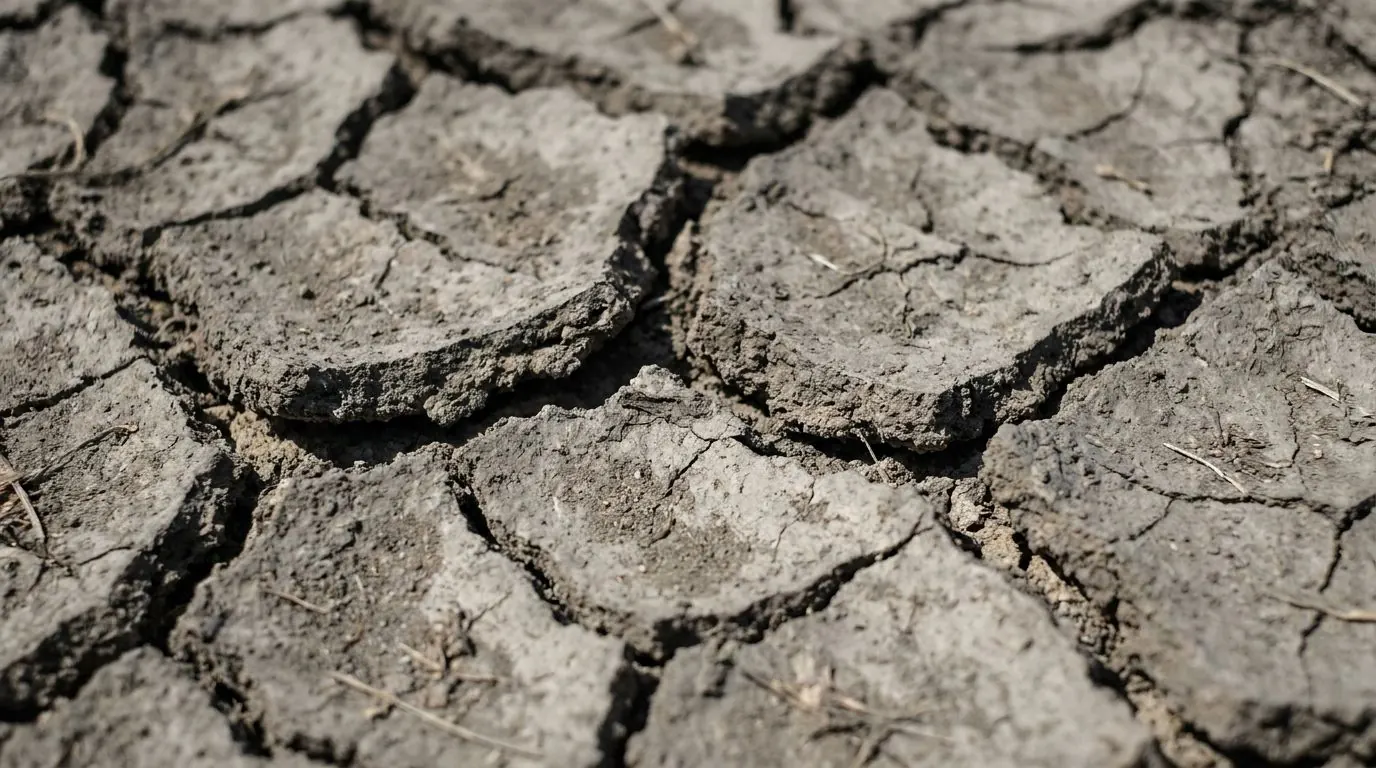
The ground through Calgary’s north and east, and out toward Airdrie and Chestermere, is dominated by glaciolacustrine clay with high shrink-swell potential.
The behaviour that matters is moisture-driven. This clay expands when it takes on water and contracts when it dries. Over a wet spring and a dry August, that is real vertical movement in the top metre or two — the “active zone.”
A shallow footing sits inside that zone and moves with it. That is what racks door frames, opens stair-step cracks in block, and lifts one corner of a deck while leaving the rest.
The fix is not a bigger footing. It is bearing below the active zone.
The inner city: variable fill
Older Calgary neighbourhoods carry decades of fill of unknown origin. It can be competent. It can also be rubble, ash, old demolition material or soft pockets, sometimes within the same lot.
You cannot assume anything about it from the surface, which is exactly why we verify capacity by torque rather than driving to a specified depth. Two piles ten feet apart on an infill lot can legitimately finish metres apart in depth.
The river valleys: alluvium and perched water
Along the Bow and Elbow, and south through Okotoks and High River, the ground is river-valley alluvium — silts and sands, variable, sometimes with perched water tables sitting above the regional groundwater level.
Perched water complicates excavation considerably. It complicates pile installation much less, which is one reason piles get specified in these areas. Depth to competent bearing varies a lot over short distances here.
West toward Cochrane: dense till and cobbles
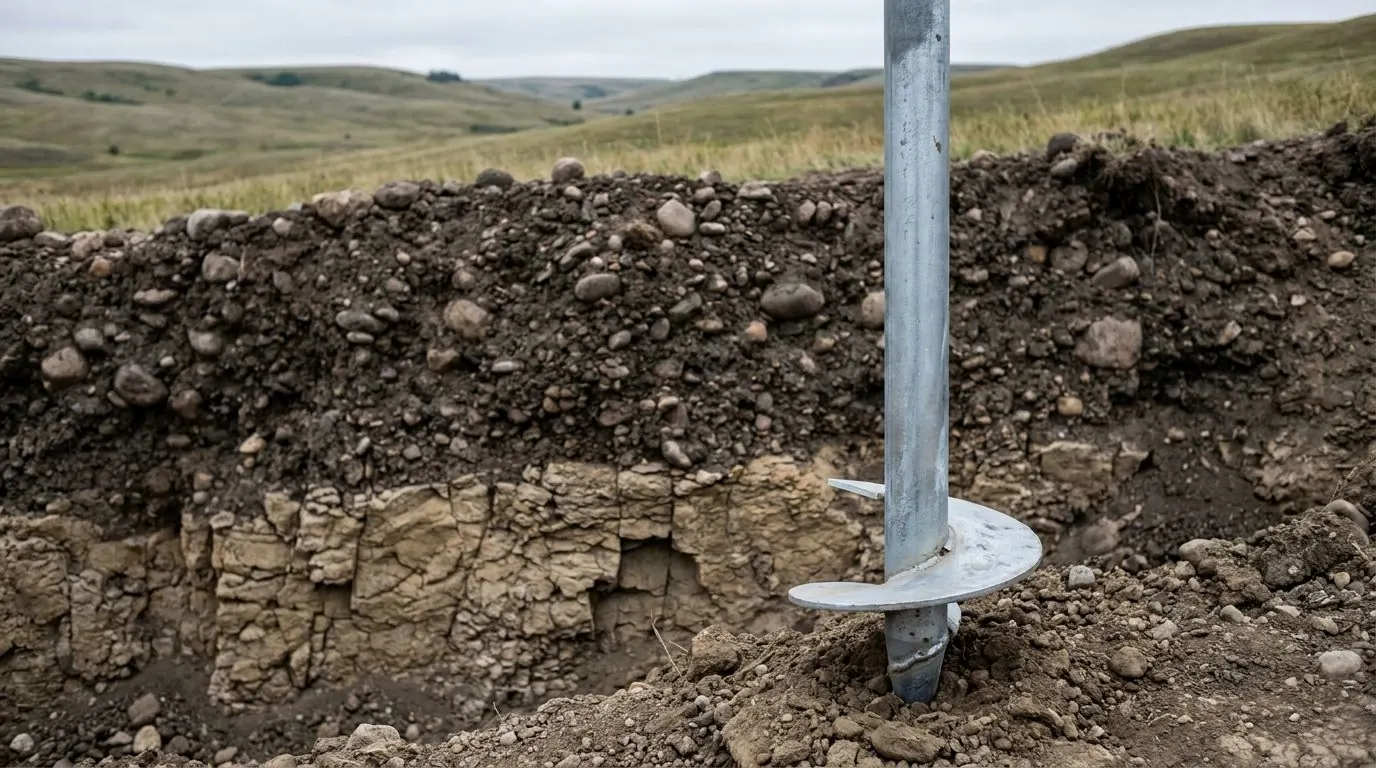
As the ground rises into the foothills, clay gives way to dense glacial till, cobbles and eventually shallow bedrock.
This is strong ground — good news for capacity, harder work for installation. It takes higher torque and heavier shafts, and there is a genuine risk of refusing on a cobble before reaching design depth. When that happens the honest responses are a relocated pile, a different pile size, or a different foundation.
Anyone quoting Cochrane at Calgary rates without asking about the site has not thought about it.
Canmore and the Bow Valley: bedrock close to surface
Further west again, competent rock can be near enough to the surface that a helical pile has nowhere useful to go. Sometimes the right answer here is not a screw pile at all — it is rock anchors or a shallow foundation bearing directly on competent rock.
Being able to say that is part of the job.
Why frost depth is the floor, not the target
Across all of this, frost penetrates roughly 1.2 to 1.8 metres. Getting below frost is the minimum condition. It is not the design objective.
The objective is competent bearing strata, and where that sits varies by kilometres, by lot, and sometimes across a single site. Which is why:
Torque, not depth, is the specification
As a pile advances, installation torque is measured continuously, and torque correlates to bearing capacity. The pile is driven until it reaches the torque that corresponds to the engineered load — whatever depth that happens to be.
Two piles on one site can finish at different depths and both be correct. One found competent ground earlier. Both carry their design load, and both have a record proving it.
A specification that says “piles to 3 m” without a capacity requirement is describing a length of steel, not a foundation.
For engineers and inspectors
We install to your specification, log torque per pile, and provide as-builts. If the ground turns out different from what a geotechnical report anticipated, you hear about it from us before we carry on — not in a report afterwards.
See how we work, or read our page for engineers and inspectors.
Need a foundation quote?
If you have a question about a foundation or want a quote, our team is ready to help. We serve Calgary and the surrounding communities.