What Are the Downsides of Screw Piles?
We install these for a living, so treat this page with appropriate scepticism — then notice that most companies selling screw piles will not write it at all.
There are five real downsides.
1. Rocky ground and shallow bedrock can stop a pile
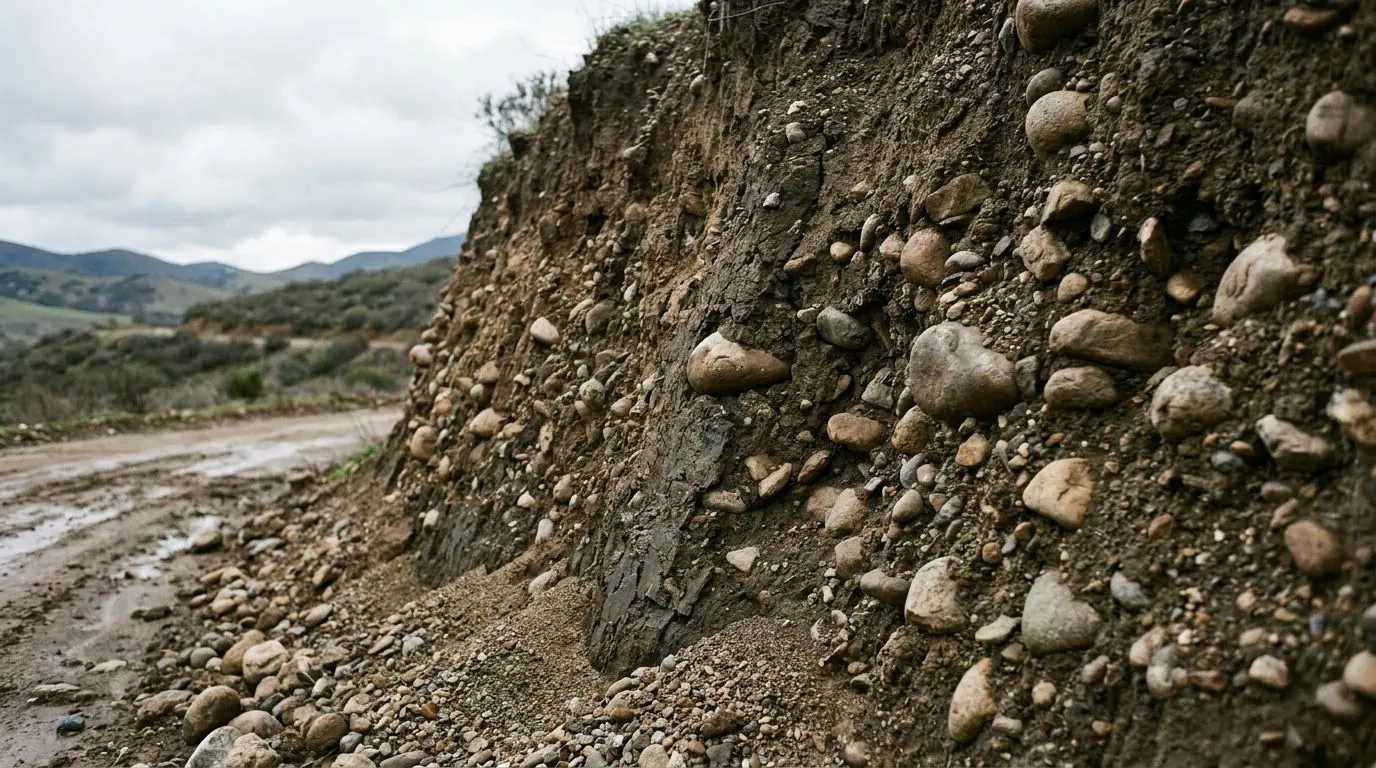
A helical pile advances by cutting into soil. Large cobbles, dense glacial till and shallow bedrock can stop it short of the depth it needs.
This matters more in some places than others. West of Calgary toward Cochrane, the ground turns to dense till with cobbles as it rises into the foothills. That is workable — it needs heavier steel and more torque — but it is slower and it costs more than a clean clay site in the city.
If a pile refuses at a depth that will not carry the load, the honest answers are a different pile size, a relocated pile, or a different foundation. Not “close enough.”
2. They are only as good as the engineering
An unverified pile is a post in the ground.
The value of a helical pile is that installation torque correlates to bearing capacity — but that only means something if somebody specified the required capacity, measured the torque, and recorded it. A crew that installs to a fixed depth with no torque record has given you steel and a guess.
If a quote does not mention torque logs or engineered capacity, that is worth asking about before you sign it.
3. Corrosion is a real long-term consideration
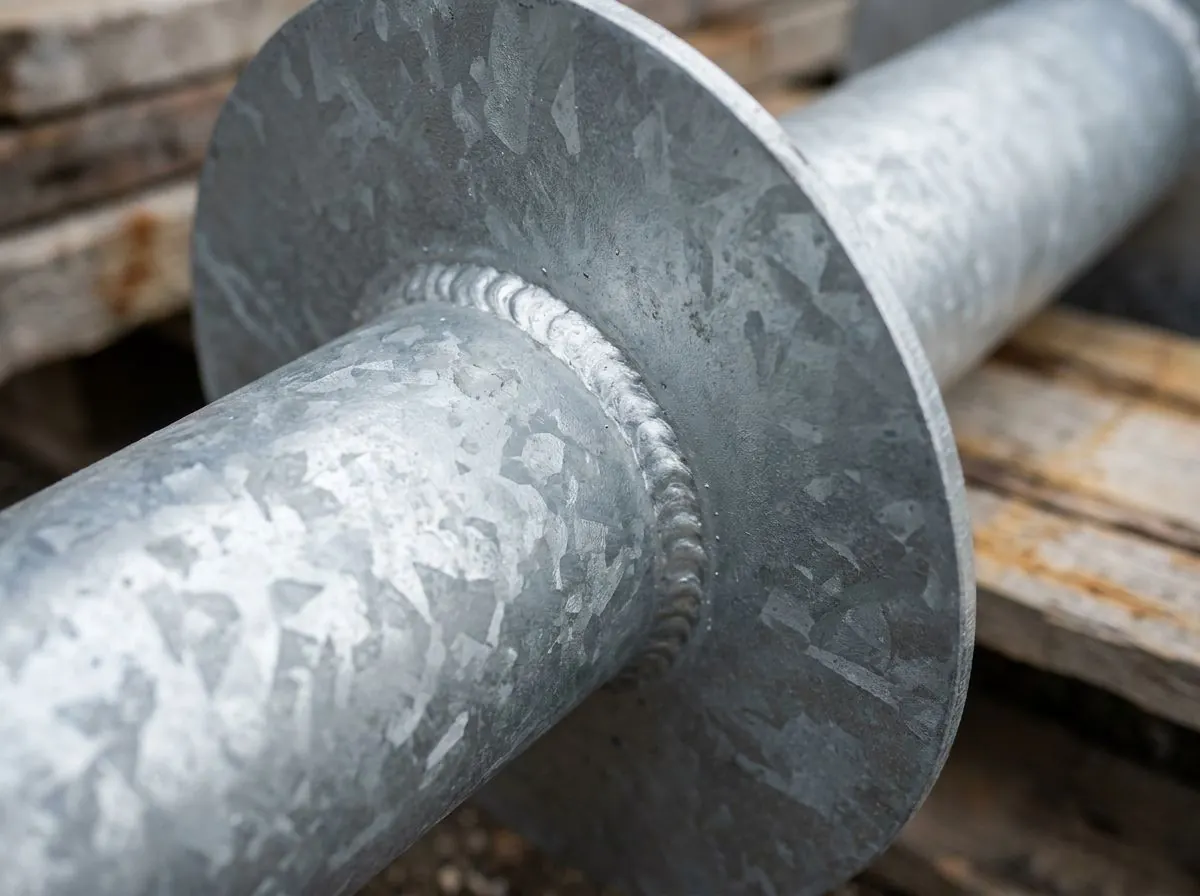
Steel in soil corrodes. Galvanizing slows it down considerably, and reputable systems are designed with a sacrificial allowance so the pile still carries its load at end of design life.
But in aggressive soils — high salinity, low resistivity, certain industrial sites — corrosion rates rise, and that needs to be accounted for in the design rather than assumed away. For most Calgary residential work it is not a practical concern. For some industrial sites it genuinely is.
4. Cost per pile is higher than concrete
Per unit, steel with a helix costs more than concrete in a tube. Screw piles win the overall comparison through labour, schedule and disposal — not materials.
On very large pile counts on open sites with easy truck access, that advantage narrows and sometimes disappears. Anyone telling you screw piles are always cheaper is selling, not advising.
5. They are wrong for some jobs
Piles carry point loads. If your structure wants a continuous bearing surface, a grid of piles is the wrong tool. A ground-level deck that is not attached to the house may not need engineered foundations at all. A small shed can often sit on skids or a gravel pad.
We would rather tell you that than take the job.
How long do screw piles last?
Properly specified galvanized piles in typical soils are designed for service lives measured in decades, and manufacturers commonly quote design lives in the 75–100 year range for their systems.
Treat any specific number with care, though — service life depends on steel thickness, coating, and how aggressive the soil actually is. It is a design output, not a product feature. Ask what design life the specification assumes and what soil data it assumed to get there.
The honest summary
Screw piles are excellent at tight access, winter installation, fast schedules, verified capacity and reactive clay. They are poor at shallow bedrock, they cost more per unit than concrete, and they are worthless without engineering behind them.
That is the whole picture. If it points away from piles on your project, we will say so.
Get a quote, or read the honest cost comparison with concrete.
Need a foundation quote?
If you have a question about a foundation or want a quote, our team is ready to help. We serve Calgary and the surrounding communities.