What Is Torque Monitoring, and How Much Weight Can a Screw Pile Support?
This is the mechanism that makes a helical pile different from a post in a hole, and it is worth understanding before you buy either one.
The basic idea
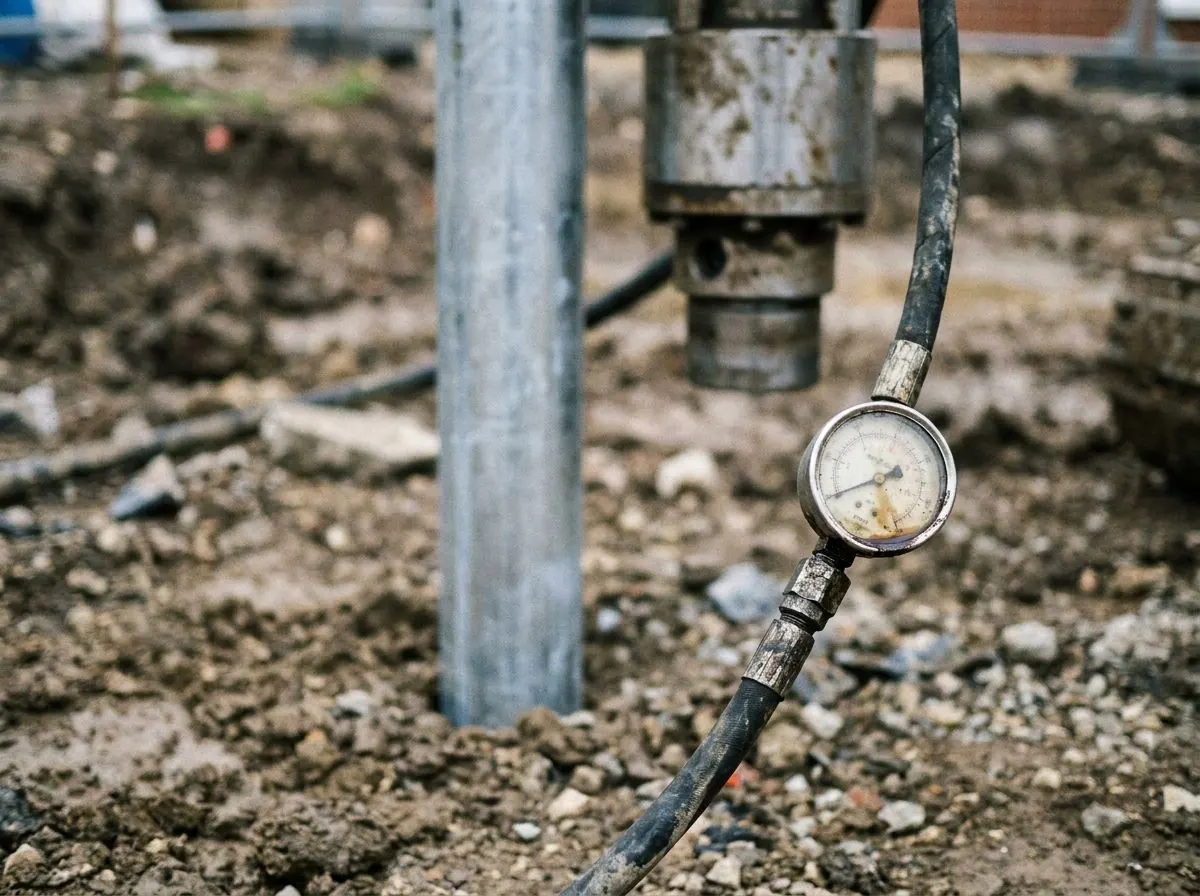
As a helical pile is rotated into the ground, the soil resists. That resistance is measured as installation torque.
Torque correlates to the soil’s bearing capacity. Empirically, the relationship holds well enough that it is the accepted method of verifying helical pile capacity in the field — you drive the pile until torque reaches the value corresponding to the required capacity, and that is your evidence.
The relationship is usually expressed as a capacity-to-torque ratio, and the ratio depends on the shaft. A narrower shaft has a higher ratio than a wide one. The engineering specifies which applies.
Why this matters more than depth
A specification that says “piles to 3 metres” describes a length of steel.
A specification that says “piles installed to a torque corresponding to X kN capacity” describes a foundation.
Depth is an output, not a target. Two piles on the same site can finish metres apart and both be correct, because one found competent bearing sooner. What makes them both correct is that each reached the required torque.
This is the practical advantage over a poured pile. Concrete is inspected before the pour and then buried — you are trusting the process. A helical pile is measured at the moment of installation, on every pile.
What makes the correlation defensible: CCMC
Torque-to-capacity is not something a contractor gets to assert. For certified pile systems the relationship is published.
The Canadian Construction Materials Centre, part of the National Research Council, issues evaluation reports for construction products including helical screw piles, assessed against the National Building Code. A pile system’s evaluation report sets out its allowable compressive and tensile capacities as a function of the final installed torque — certified load-versus-torque tables rather than a rule of thumb.
That is what turns a torque reading into a number you can put on a permit submission. The installer records the final torque at each pile location, the report says what capacity that torque corresponds to for that specific product, and the two together are the evidence.
Three things worth knowing about the boundaries:
- It is product-specific. The tables belong to a particular pile system. Torque figures from one manufacturer’s report do not transfer to another’s steel.
- The tables have limits. Where the required load sits outside what the evaluation covers, you are into site-specific load testing under a professional engineer rather than table lookup.
- The evaluations are public and they expire. Anyone can look up a current evaluation in the CCMC Registry of Product Assessments. If a supplier tells you their pile is CCMC-listed, that claim is checkable in about a minute — and worth checking.
So how much weight can a screw pile support?
There is no single answer, and be sceptical of anyone who gives you one without asking questions.
Capacity depends on:
- Shaft size and wall thickness
- Helix diameter, and how many helices
- Soil — the same pile carries very different loads in dense till and soft clay
- Direction of load — compression, tension (uplift) and lateral capacities are all different numbers
- Design factors applied to get from ultimate to allowable capacity
Ranges quoted online span from a few thousand pounds for light-duty hand-driven screws to hundreds of kips for large industrial shafts. Both are true statements about very different products.
The useful question is not “how much can a screw pile hold” but “what capacity does my structure require, and what does this pile achieve in this soil.”
Uplift matters more than people expect
In Alberta, uplift is often the governing case rather than compression.
Expansive clay lifting during a wet cycle applies tension to a pile. So does wind on a light structure — a post-frame shop or an agricultural building can want serious uplift resistance while carrying very little vertical load.
Helices resist uplift well, which is a large part of why they suit this region. But it has to be designed for, not assumed. Ask whether the quoted capacity is compression, tension or both.
What you should receive
For any engineered installation:
- A torque log — installation torque recorded per pile
- The capacity that corresponds to, with the ratio used
- As-built locations and depths
- Drawings stamped by an APEGA-licensed P.Eng. where the permit requires them
If a contractor cannot produce a torque log, they have not verified anything. That is the question worth asking before you sign, not after.
Load testing
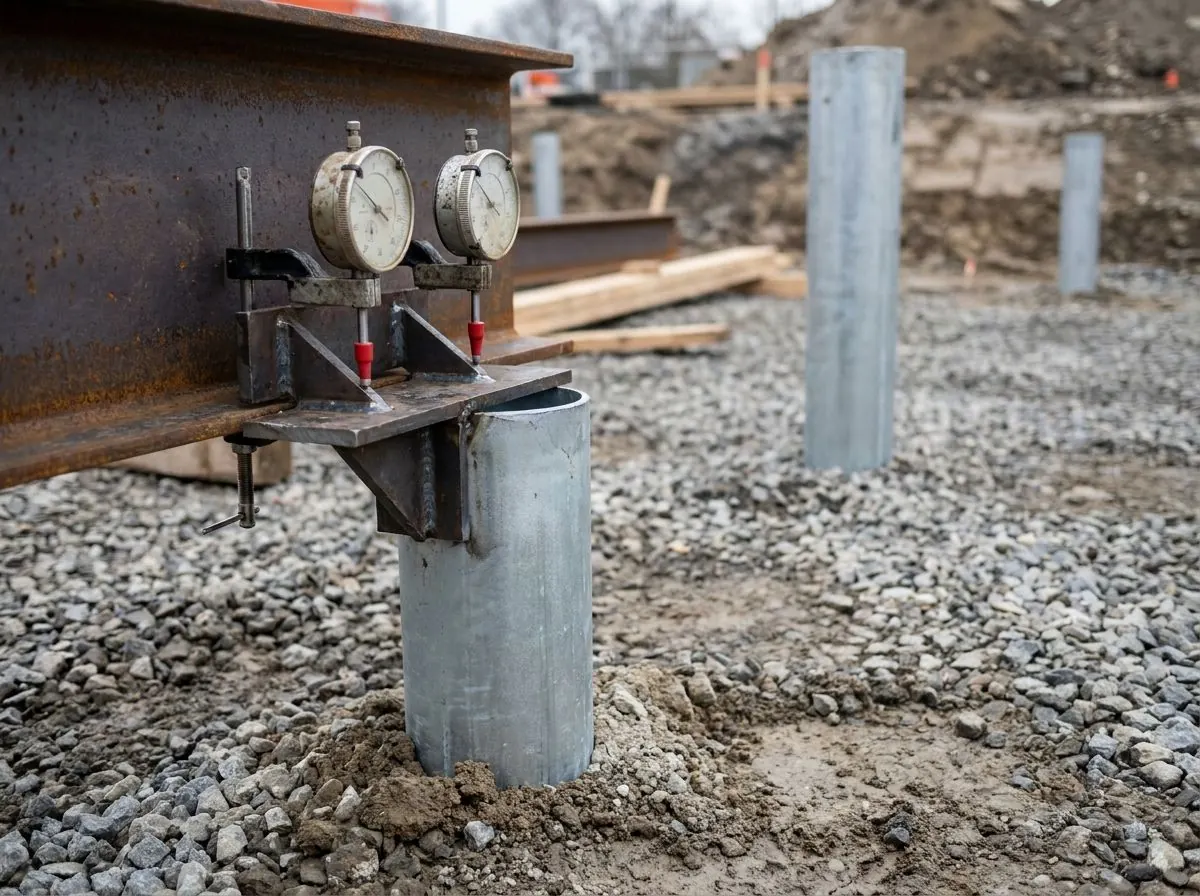
Where a project needs more than torque correlation — larger industrial work, unusual soils, or a client specification — piles can be physically load tested in compression, tension or laterally. The pile is loaded in increments and displacement measured.
It costs more and takes longer, and on the right project it is entirely justified. We would rather talk you through when it is warranted than sell it as standard.
The short version
Torque is how a helical pile proves its capacity. Depth is whatever it took to get there. If you are being sold a depth without a capacity, you are buying steel rather than a foundation.
Read more for engineers and inspectors, or about our engineering and pile load testing.
Need a foundation quote?
If you have a question about a foundation or want a quote, our team is ready to help. We serve Calgary and the surrounding communities.