Commercial Piling in Calgary
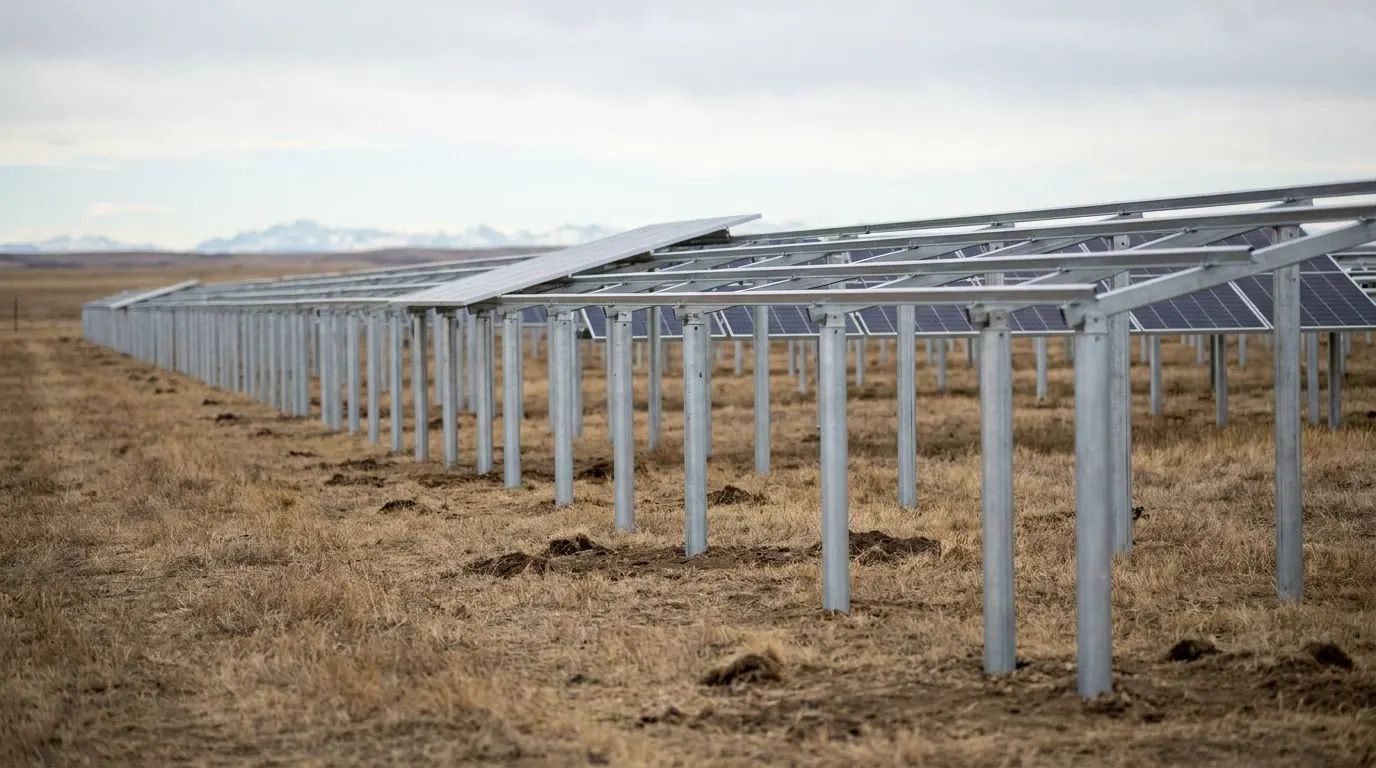
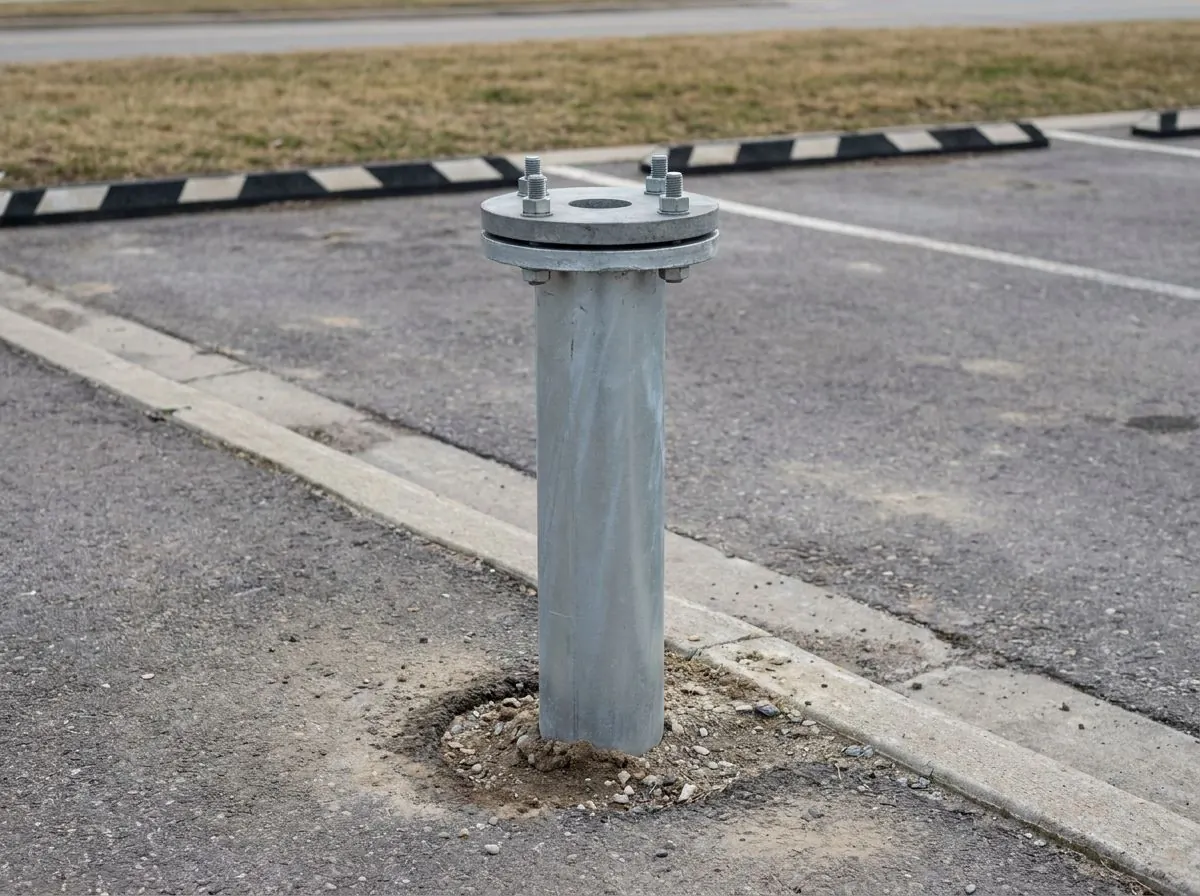
Grade beams, structural slabs, solar array foundations, sign and light pole bases, EV charging infrastructure and boardwalks.
Our Commercial Piling Process
Every job follows a clear, proven process so you know exactly what to expect from start to finish.
Quote
Send dimensions or drawings. Most quotes come back inside 48 hours.
Site visit
We confirm access, soil expectations and layout before scheduling.
Engineering
Stamped drawings and load calculations where the permit requires them.
Install
Piles driven to engineered torque. Most residential jobs take half a day.
Torque log
You receive the torque record, verified capacity and as-built documentation.
What commercial piling actually involves
Most commercial helical work is not a foundation. It is an array. A solar racking field is rows of identical posts; a parking lot is one light standard base detail repeated down an aisle; a pylon sign is a small group under a large overturning moment. Boardwalks, EV charging pedestals and small pre-engineered structures are the same problem. The design question gets answered once and then executed hundreds of times, so layout control, production rate and the paperwork trail decide the job far more than the pile detail does.
The buyer is a general contractor's superintendent or a developer's project manager, buying a date and a submittal rather than steel. Electrical waits on bases to land conduit against, a racking delivery is booked, and closeout stalls on whichever subtrade files its as-builts last. Arriving inside the committed window and returning torque records the same week is worth more here than a marginally lower rate per pile.
Helicals earn the slot for one reason: there is no cure. Racking, poles and pedestals can be set the day the piles go in, taking a step off the critical path. No spoil leaves a finished lot, and the work carries on through a Calgary winter.
How the job runs
Setting out comes before anything turns, because array work is won or lost there. The grid is staked from survey control on the drawing, not measured off a curb, and tolerance on position and plumb is tighter than residential work ever needs — prefabricated racking and bolted base plates have only the adjustment their slots allow, and a pile outside that gets pulled and reinstalled. Locates matter more here too: retrofit EV and lighting work goes into existing pavement over lighting circuits, irrigation and abandoned conduit, much of it private and outside the one-call system.
The first row verifies the design assumption — better to learn torque is behaving differently on pile three than on pile three hundred. After that it is production, sequenced around other trades. Torque is recorded per pile and reconciled against the pile schedule each shift, so a shortfall surfaces the same day and is resolved with the engineer while the crew is still on site. Inspection is rarely a single regime: a building inspector on the structure, an electrical inspector on the charging or lighting work, often the owner's engineer on field review, each wanting the record in its own form.
What decides the spec
The governing load case is usually not the obvious one. Solar racking is dominated by uplift and lateral demand from wind on an inclined panel plane, with snow acting the other way, so helices are sized against tension as much as compression. Sign and light standards are an overturning problem, and the connection at the top — weld-on plate, bolt circle or cast anchor cage — is as much of the specification as the helix beneath. Boardwalk piles carry little vertical load but see frost adhesion on the shaft.
Repetition then changes the economics of specifying. One configuration installed across a whole array usually beats optimising each location, until the array crosses a soil boundary — where two configurations and a mapped transition beat one compromise. Access sets the rest: the machine that can reach the rows caps torque, torque caps capacity per pile, and that drives spacing and count.
Areas We Serve for Commercial Piling
We provide commercial piling across Calgary and area. Ground conditions and permitting authority differ by community — pick yours for the local detail.
City of Calgary
Quote in 48 hours
City of Airdrie
Quote in 48 hours
Rocky View County
Quote in 48 hours
Foothills County
Quote in 48 hours
City of Chestermere
Quote in 48 hours
Wheatland County
Quote in 48 hours
Foothills County
Quote in 48 hours
Rocky View County
Quote in 48 hours
Commercial Piling in practice
Frequently Asked Questions about Commercial Piling
How deep do screw piles need to go in Alberta?
Are screw piles cheaper than concrete?
What are the downsides of screw piles?
Can screw piles be installed in winter?
Need Commercial Piling?
Chinook Piling installs engineered screw pile foundations across Calgary and the surrounding communities. Call us today for a free estimate or to schedule service.