Deck Blocks in Calgary: When They Work and When They Heave
Deck blocks are the cheapest way to hold a deck off the ground, and for some decks they are genuinely the right answer. The problem is that they are sold as a universal one, and in Calgary the ground has opinions about that.
Here is the whole issue in one sentence: a deck block sits on the surface, and the surface moves.
Can I use deck blocks instead of footings?
Sometimes, and the deciding factor is almost never cost.
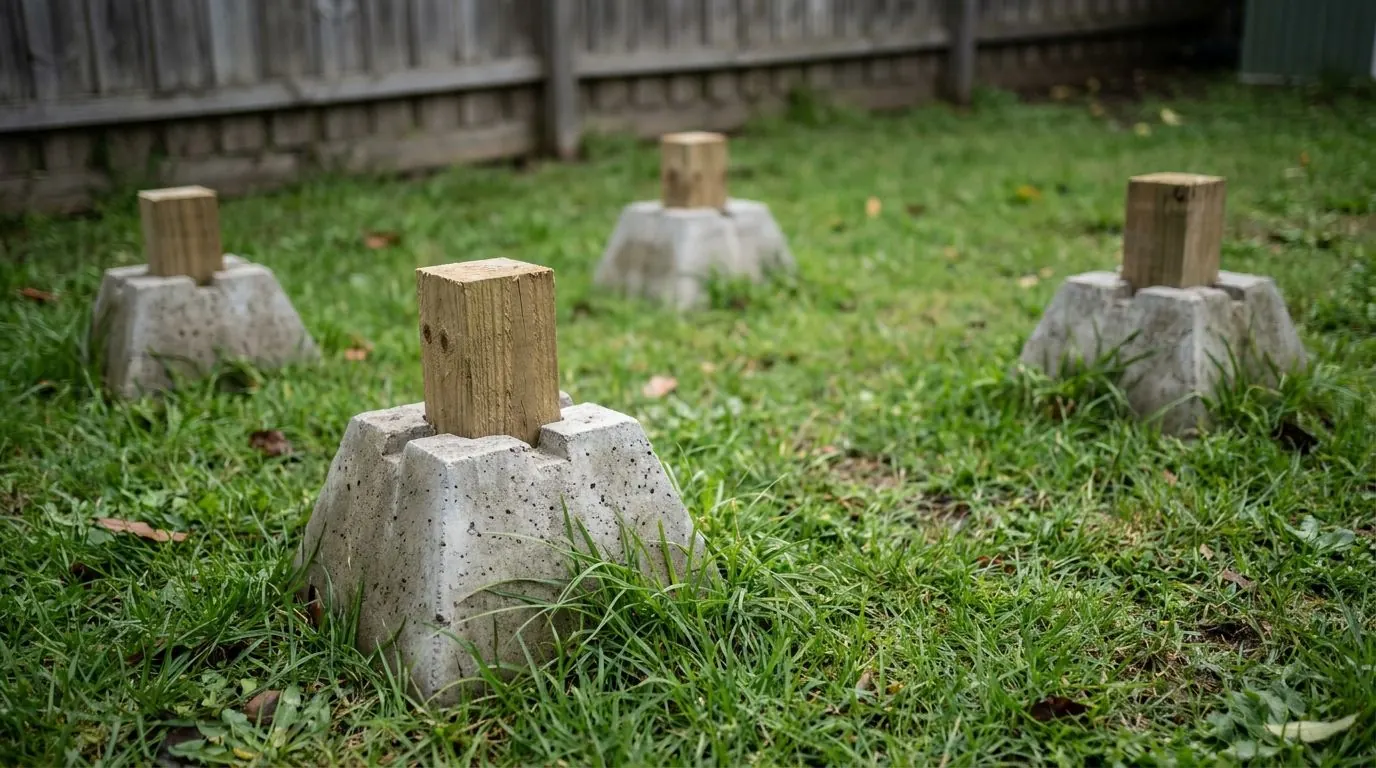
A precast deck block — the pyramid-shaped “elephant foot” you buy stacked on a pallet — is a bearing pad that spreads load over a bit of ground. It does not go below frost. It does not attach to anything. It relies entirely on the soil directly under it staying exactly where it is.
That is fine for a structure that is allowed to move a little, is not attached to your house, and sits low enough that a bit of seasonal rise and fall is a cosmetic issue rather than a structural one.
It is not fine for anything else, and here that list is longer than most people expect.
Can you use deck blocks in Canada?
Yes, but the frost line is the thing that makes this a different question here than it is in Ohio.
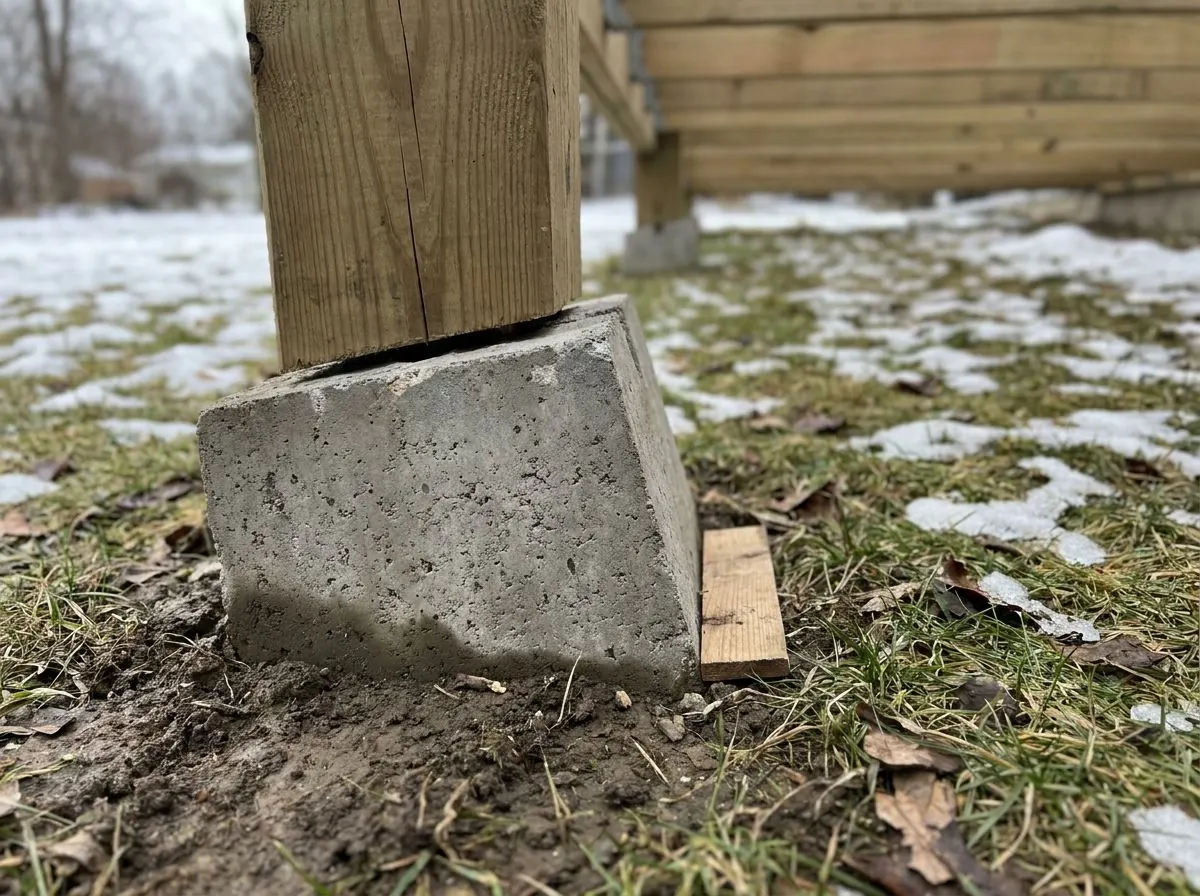
In the Calgary area frost routinely penetrates well over a metre. A foundation that carries load is expected to bear below that depth, so it is sitting in ground that does not freeze and therefore does not lift. A deck block sits on grade. By definition it is inside the layer that freezes, thaws and moves — every year, and in our case repeatedly within the same winter, because chinooks thaw the ground and it refreezes days later.
Add Calgary’s clay, which swells when it takes on water and shrinks when it dries, and you have two independent mechanisms moving the same block. That is why a block-supported deck that was dead level in September can be visibly out by April, and why it sometimes comes back part of the way in summer, which confuses people into thinking they imagined it.
None of this makes blocks illegal. It makes them unsuitable for anything that has to stay put.
There is also a permit question, and it has a real answer that we are not going to guess at: the height at which a deck needs a permit, and what foundation it then requires, is set by your authority having jurisdiction — the City of Calgary, Airdrie, Rocky View County and the rest all administer this themselves. Ask before you build, not after. A deck built on blocks that then fails inspection is an expensive lesson.
When not to use deck blocks
Four situations where blocks are the wrong call regardless of budget:
Anything ledgered to the house. If the deck is bolted to your rim joist, one end is on a foundation that goes below frost and the other is on blocks that do not. They will move differently. The joint between them is where that argument gets settled, and it is attached to your house.
Anything that needs a permit. If an inspector is going to look at it, the foundation has to be something a code official recognises as a foundation.
Anything tall. Height amplifies small movement into noticeable lean, and raises the consequences if a support shifts sideways rather than just up.
Anything carrying concentrated load. Hot tubs are the common one. A filled tub plus occupants is a large load in a small footprint, and it is exactly the case where you want engineered capacity rather than a block on dirt.
Where blocks are reasonable: a low, small, freestanding platform, detached from the house, under permit threshold, where you accept that you will re-level it occasionally. A ground-level patio deck at the bottom of the yard is a fair use of a deck block. Say so out loud and nobody is misled.
“Deck footings without digging” — what people are actually looking for
This is the search that tells you what most people want. They do not want blocks specifically. They want a foundation that does not involve digging a dozen holes, mixing or ordering concrete, waiting for it to cure, and then getting rid of the spoil.
That is a screw pile. A steel shaft with a helix near the tip is turned into the ground until torque confirms it has reached soil that carries the load — below frost, in one pass, with no excavation and no spoil pile. The deck can be framed the same day.
The relevant comparison is not really blocks versus piles. It is:
| Deck block | Poured footing | Screw pile | |
|---|---|---|---|
| Below frost | No | Yes | Yes |
| Excavation | None | A hole per footing | None |
| Spoil to remove | None | Yes | None |
| Cure time | None | Days | None |
| Capacity known | No | By design | Verified by torque |
| Can be inspected | Not really | Yes | Yes, with a torque log |
Blocks and piles share the two things people actually like about blocks — no digging, no waiting. Piles add the one thing blocks cannot offer, which is getting below the ground that moves.
What we would tell you on site
If it is a low freestanding platform and you are comfortable re-levelling it now and then, use blocks and spend the money on better decking.
If it is attached to the house, needs a permit, is more than a step or two off grade, or is carrying a hot tub, blocks are a false economy — not because they are cheap, but because the failure mode is your deck slowly going out of level and there being no good way to fix it afterwards without redoing the foundation.
Worth reading next: how many piles a deck actually needs, what the frost line means here, and how Calgary clay behaves.
If you want a straight answer for your specific deck, tell us the dimensions and height and we will tell you what it needs — including when that is blocks and you do not need us.
Need a foundation quote?
If you have a question about a foundation or want a quote, our team is ready to help. We serve Calgary and the surrounding communities.